Wednesday, March 6, 2013

Mrs. Wishy Washy

I have been cleaning all morning in anticipation of a special visitor today. Check out my other blog for news about our visitor. So before nap we read an old favorite:

Mrs. Wishy-Washy by Joy Cowley

Tuesday, March 5, 2013

Mommy Books

Oliver will repeat or try to repeat almost any word you say, but he won't say "mommy." So, I have been reading some books about mommies lately in order to get him to say it!

The first one we read(and probably my favorite mommy book) is...
Mommy Mine by Tim Warnes


and then we read:

Are You My Mother by P.D. Eastman(Dr. Seuss)


Let's hope that helped! ;)

Sunday, March 3, 2013

Catch up Time

Well life got busy, as it always does, and I have not posted for a while, however, I have still been reading. Here are some of our awesome books we read:

365 Penguins by Jean-Luc Fromental


This book was a little long for my boys, but I found it funny, and they loved the pictures!

Waddle by Rufus Butler Seder


This is one of Evan's favorite books. However they did the illustrations is so awesome! It's like a cartoon in a book.

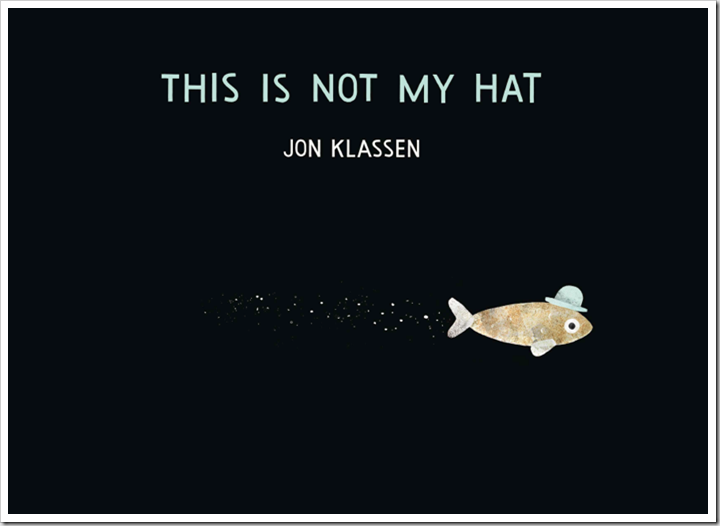
This is Not My Hat by Jon Klassen


The 2013 Caldecott winner. Loved his first book: I want my Hat Back. This one is pretty cute too, but I like the first one better.

One Fish, Two Fish, Red Fish, Blue Fish by Dr. Seuss


Dr. Seuss's birthday was yesterday! Happy Birthday Dr. Seuss!

Richard Scarry's Cars and Trucks and Things That Go by Golden Books


Oliver is talking a lot more and is always asking "What's that?" So we didn't really "read" the whole book, we did more of a "what's that" picture walk.

Tuesday, February 26, 2013

Sky Color

Today our sky is white. All we can see is snow upon snow upon snow. One of the things we love about the sky is it's many colors and we miss seeing all the colors, so today we read:

Sky Color by Peter H. Reynolds


Sunday, February 24, 2013

Happy

Weekend days with no schedules and an endless amount of fun to be had has put us all in a good mood. Today we read one of my top ten favorites of 2012:
Happy by Mies Von Hout

The illustrations in this book are done with colored chalk on a black background. It is just beautiful. Oh an he has another book coming out in April with the pictures drawn in the same style. Can't wait!!

Saturday, February 23, 2013

Wee Little Lamb

On Saturdays we tend to let Evan take a break from naps, so he is downstairs playing Chutes and Ladders with his daddy. So it's just me and the wee one AKA Oliver. Today we read:

Wee Little Lamb by Laura Thompson

Friday, February 22, 2013

How Do You Feel?

Two posts in one day, imagine that! Well we are still snowed in. Day two has been a day of emotions for the boys- happy to have a Disney Jr. cartoon marathon and daddy working at home, mad cause we have to take a nap and stop jumping on every household surface, and sad because we are stuck inside instead of out doing something fun. Here is our story for today:

How Do You Feel? by Anthony Browne

Bedtime for Monsters

Well yesterday was our snowpocalypse. The boys were cooped up inside all day, eating everything in sight,making mesess everywhere, and running around like crazy monsters. By bedtime I was ready for the monsters to go to sleep. So we read:

Bedtime for Monsters by Ed Vere

Wednesday, February 20, 2013

Green

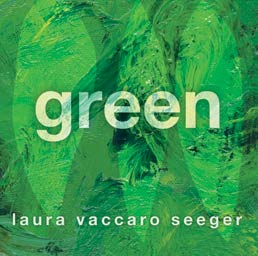
I thought the Groundhog predicted spring was right around the corner. But, here we are on the verge of a snowpocalypse. For some spring inspiration we read Green by Laura Vaccaro Seeger. It is a Caldecott honoree and though the words are simple, the pictures remind me of spring time. :)

Tuesday, February 19, 2013

A is for Musk Ox

Having a bad day? Need a good laugh? Read this immediately! This makes my Top 10 Favorite Children's Picture Books of 2012.

A is for Musk Ox by Erin Cabatingan

Monday, February 18, 2013

Zoo Ah-Chooo

If you have ever lived in Kansas, you know how fickle the weather is. One day it's icy and 23 degrees and the next it's sunny, humid, and 70 degrees. All this fickle weather has been doing a number on my allergies. So, after sneezing a lot and dealing with my watery eyes, I read the boys: Zoo Ah-Choooo by Peter Mandel

Sunday, February 17, 2013

Mad at Mommy

Evan has had a rough morning. He didn't want to clean up, he didn't want to eat his lunch, and he didn't want to take a nap. I couldn't have found a better choice for today's story:

Mad at Mommy by Komako Sakai

Wednesday, February 22, 2012

Chuckling Ducklings and Baby Animal Friends

This book is all about names of various baby animals. The illustrations are pretty cute. You might be surprised of some of the names. I was!


Lesson Ideas:

Science/Vocabulary- Activating Prior Knowledge: I would have a poster prepared ahead of time of about 6 different animals from the story. Write the name next to the animal and cover it with a post it. Before reading, ask the kids if they know the names of any of these baby animals. Write the name they think it's called on top of the post-it. Tell the kids to watch for each animal as you read the story and raise their hand when they hear/see one of the animals on the poster. Read the name they thought the animal was, lift up the post-it, and have them check to see if they were correct. Remind them it is okay if their guesses were wrong, as that is part of learning. Finish reading the story and going through each animal on the poster as it appears in the story.

Writing: After reading, pass out one baby animal picture to each student.You can use baby animals from the story or ones not in the story. If you use ones not in the story make sure to include other books for reference. If you need realistic pictures, this link has great pictures you can print and the students can color them. They need to label the baby animal picture with it's name and then draw the adult animal and name it as well that goes with the baby.(If you don't want the kids to draw the adult animal,you could also provide a picture for them to glue.) They will need to complete the writing prompt once their picture is drawn and labeled. A baby _______ is called a _________. An adult _________ is called a ________.

Compare/Contrast: They then need to write how the animal changed as it became an adult. For example, did it grow hair, feathers, get fatter, change colors, etc.


For a page to use with this lesson, click here NOTE:You will need to click on insert header to get the full document.

Monday, February 13, 2012

Dear Polar Bear

This book is about a Polar bear who needs to decorate his new home. He sends letters to his bear friends around the world asking them for help sending items for his home. There are pull out letters to read and lots of different kinds of bears in the story.


Lesson Ideas:

Writing: As practice for letter writing- Have students think about something they need for their room. Have them write a letter to someone in their family asking for that item. Make sure to go over parts of a letter and how to start and end a letter. For a letter form to use click here

Language Arts: Compare/Contrast- You will need nonfiction books about the other types of bears in the story. Using a Venn diagram, compare polar bears to another type of bear in the story. Write at least 3 facts in each section of the Venn diagram.


Language Arts Standards:
3.Students apply a wide range of strategies to comprehend, interpret, evaluate, and appreciate texts. They draw on their prior experience, their interactions with other readers and writers, their knowledge of word meaning and of other texts, their word identification strategies, and their understanding of textual features (e.g., sound-letter correspondence, sentence structure, context, graphics).
4. Students adjust their use of spoken, written, and visual language (e.g., conventions, style, vocabulary)
to communicate effectively with a variety of audiences and for different purposes.
5. Students employ a wide range of strategies as they write and use different writing process elements appropriately to communicate with different audiences for a variety of purposes.
6. Students apply knowledge of language structure, language conventions (e.g., spelling and punctuation), media techniques, figurative language, and genre to create, critique, and discuss print and nonprint

Tuesday, February 7, 2012

Mouse Shapes

From the creator of Mouse Paint and Mouse Count. This story follows the three mice as they try to trick the cat by building objects using shapes and hiding behind them. This would be great to read before a geometry lesson in math.


Lesson Idea: Math- After reading the story, go over the shapes used in the story and discuss each one noting properties- sides, corners, etc. Talk about the different objects the mouse created using the shapes. Give students a variety of paper shapes in different sizes like the ones in the story and have them create their own picture or object using the shapes. The nice thing about using paper shapes is that the students can glue it down onto the paper once it is made. If you don't have paper shapes, you could also use pattern blocks and let them trace around each one and color it in. Takes more time, but works just as well. I have created a worksheet that you could use to go along with this story. You can get it by clicking on this link
Note: Once you get into the document go to insert and click header. Hopefully it pops up for you!

Geometry Standards K-2:

Standard: Analyze characteristics and properties of two- and three-dimensional geometric shapes and develop mathematical arguments about geometric relationships.
Benchmarks:
-recognize, name, build, draw, compare, and sort two- and three-dimensional shapes
-describe attributes and parts of two- and three-dimensional shapes
-investigate and predict the results of putting together and taking apart two- and three-dimensional shapes.


Standard:Use visualization, spatial reasoning, and geometric modeling to solve problems
Benchmarks:
-create mental images of geometric shapes using spatial memory and spatial visualization
-recognize and represent shapes from different perspectives
-recognize geometric shapes and structures in the environment and specify their location


Thursday, February 2, 2012

Chester

This book had me giggling throughout. Chester the cat doesn't like the story the author wrote, so he crosses hers out and adds his own with a red marker. Chester is quite narcissitic, but very funny.

Lesson Idea: Writing- This would be a great book to use during a writing lesson on editing stories and adding more details to a story. You could make up a very plain story with minimal drawings and then edit it and add more details. You could divide the students into groups and give each group one page of the story to edit together, or give 1 page to each student to edit and then come back to share when finished, or do it as a whole class together. Once you have completed this activity, then have students go back to choose a piece of writing they have done and work on adding more details to it. This lesson may take a day, a few days, or a week to complete. For a printable generic story click here

National Language Arts Standards:
4. Students adjust their use of spoken, written, and visual language (e.g., conventions, style, vocabulary)
to communicate effectively with a variety of audiences and for different purposes.
5. Students employ a wide range of strategies as they write and use different writing process elements appropriately to communicate with different audiences for a variety of purposes.
6. Students apply knowledge of language structure, language conventions (e.g., spelling and punctuation), media techniques, figurative language, and genre to create, critique, and discuss print and nonprint

Friday, January 27, 2012

The Sunflower House

Kansas's 151st birthday is on Sunday January 29, 2012. Here is a great book about Kansas's state flower: The Sunflower. Book Summary: A boy along with his father plants sunflower seeds in his yard. He then watches and tells about each stage of growth and what he likes to do when they are in full bloom.

Lesson Ideas:
Science: Sequencing the stages of how Sunflowers/flowers grow and learning about and labeling the parts of a Sunflower. The sequencing petal template came from The Mailbox Teacher's Helper Magazine April May 2006. You could probably search online and find something similar or students could make yellow petals and write and draw each stage. There are 6 stages/petals total on mine- though you can only see 2 of them.

National Science Standard:Life Science
-Characteristics of organisms
-Life cycles of organisms
-Organisms and environments


Writing: Cut out all the Sunflower parts. Before gluing on the petals, have students write words on each petal associated with Sunflowers. While the students are working, bring them a handful of sunflower seeds. Encourage them to taste them and use how they taste as one of the words they write. Glue down the seeds with actual glue, not glue stick. Once the sunflower is glued on, have the students copy the sentence prompt and finish the sentence with their own ideas. If time, they could decorate the background with a picture to go with their sentence, or maybe a field or garden where the sunflower may be found.

National Language Arts Standards:
3. Students apply a wide range of strategies to comprehend, interpret, evaluate, and appreciate texts.
They draw on their prior experience, their interactions with other readers and writers, their knowledge
of word meaning and of other texts, their word identification strategies, and their understanding of textual features (e.g., sound-letter correspondence, sentence structure, context, graphics).
4. Students adjust their use of spoken, written, and visual language (e.g., conventions, style, vocabulary)
to communicate effectively with a variety of audiences and for different purposes.